


FEATURED
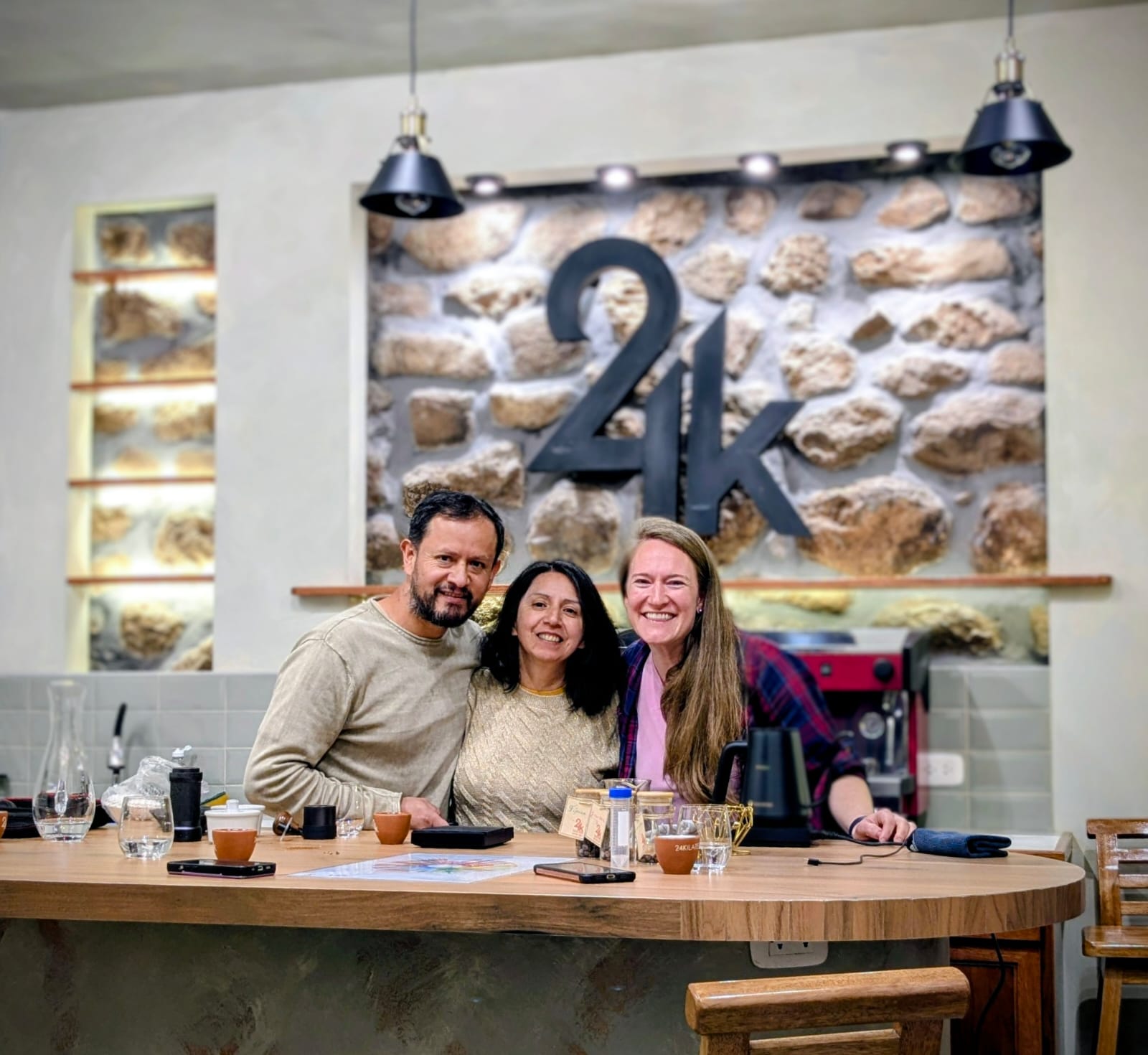
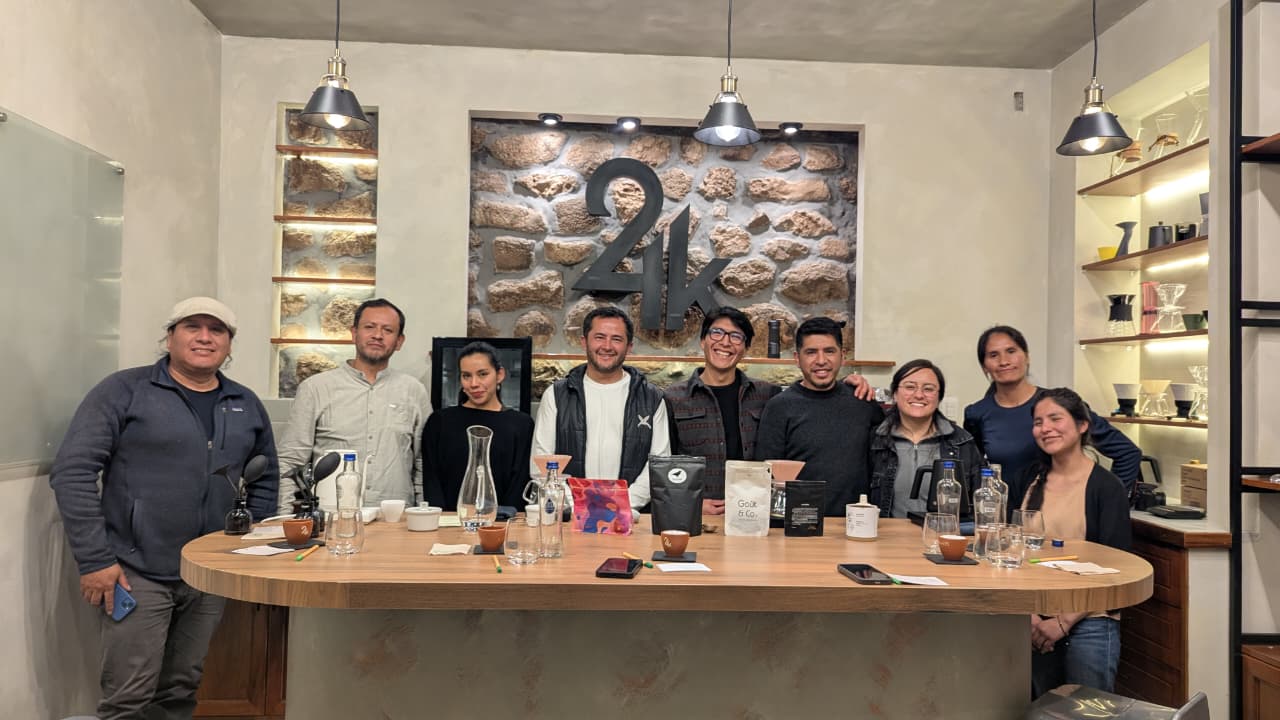
The Cusco Coffee Laboratory
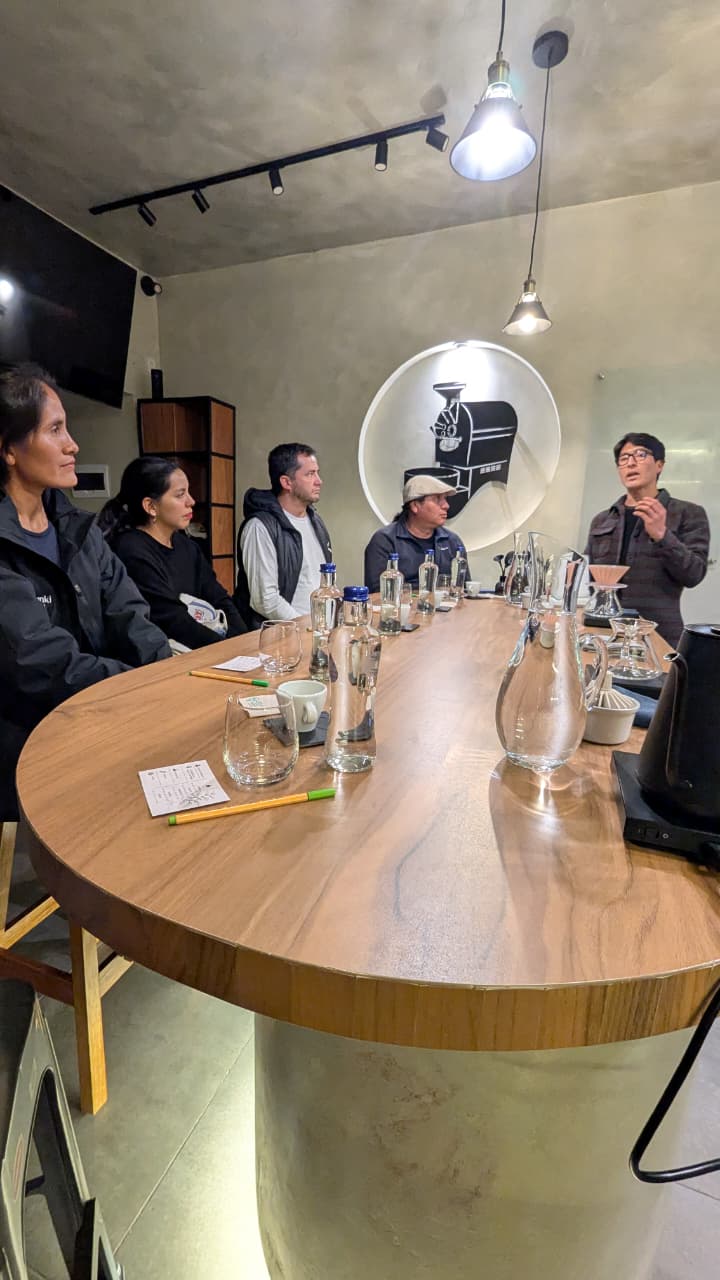
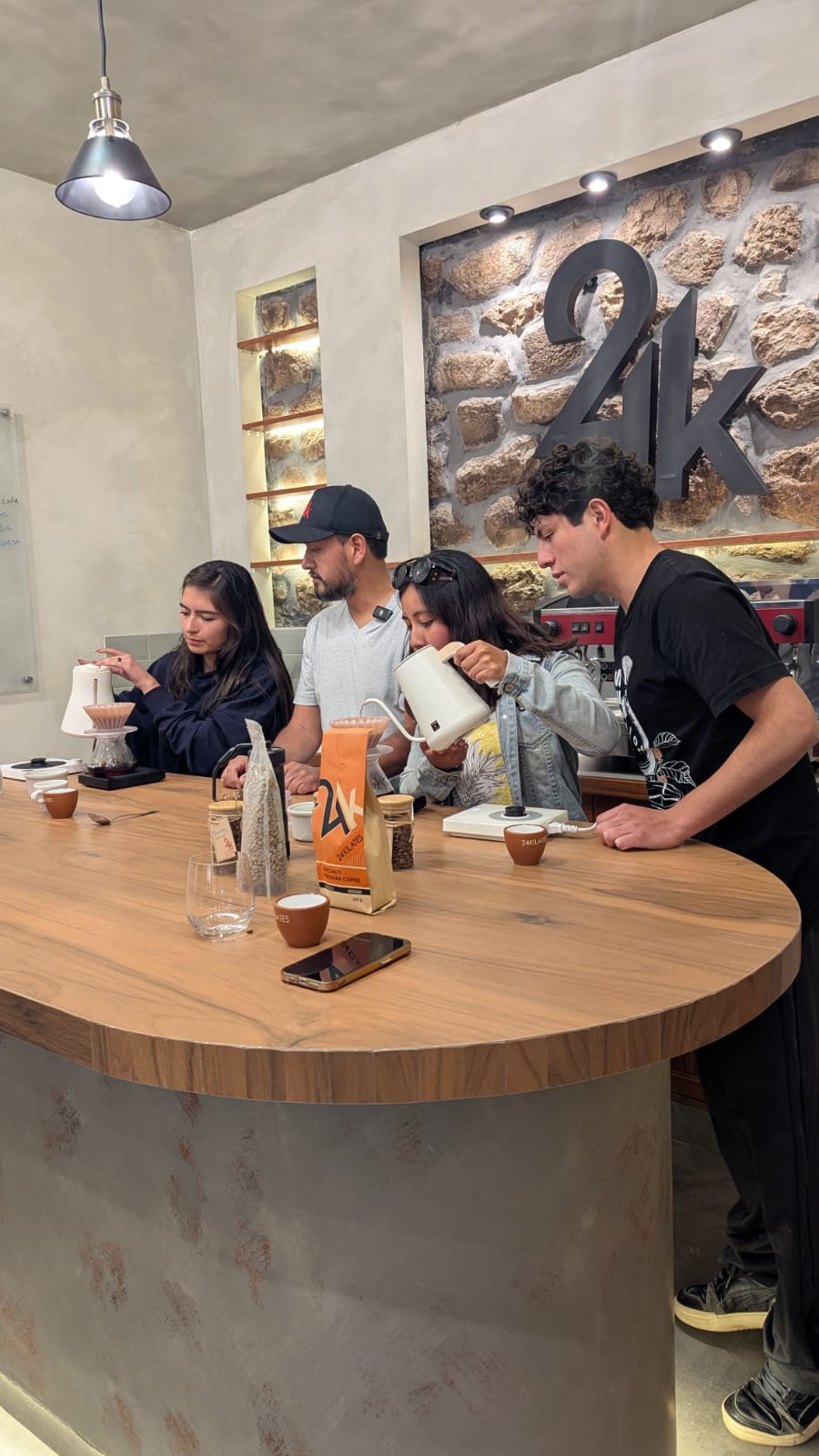
Join us in our state-of-the-art laboratory in the heart of Cusco. This comprehensive 2.5-hour workshop covers everything from bean evaluation and sensory development to advanced extraction techniques. Perfect for coffee enthusiasts looking to deepen their understanding of the craft. The tour is guided by 2025 National Brewers Champion Herber Huamani, who is also a world cup participant in the 2026 Belgium World Brewers Championship.
SYLLABUS
V60 in hand, walk the lab
V60 in hand, walk the lab
- 00:00–00:05 · Welcome & V60 — Welcome guests into the lab and hand them a pre-brewed V60 to sip as they settle in.
- 00:05–00:08 · Laboratory tour — Walk the space: roasting setup, espresso bars, and coffee testing equipment.
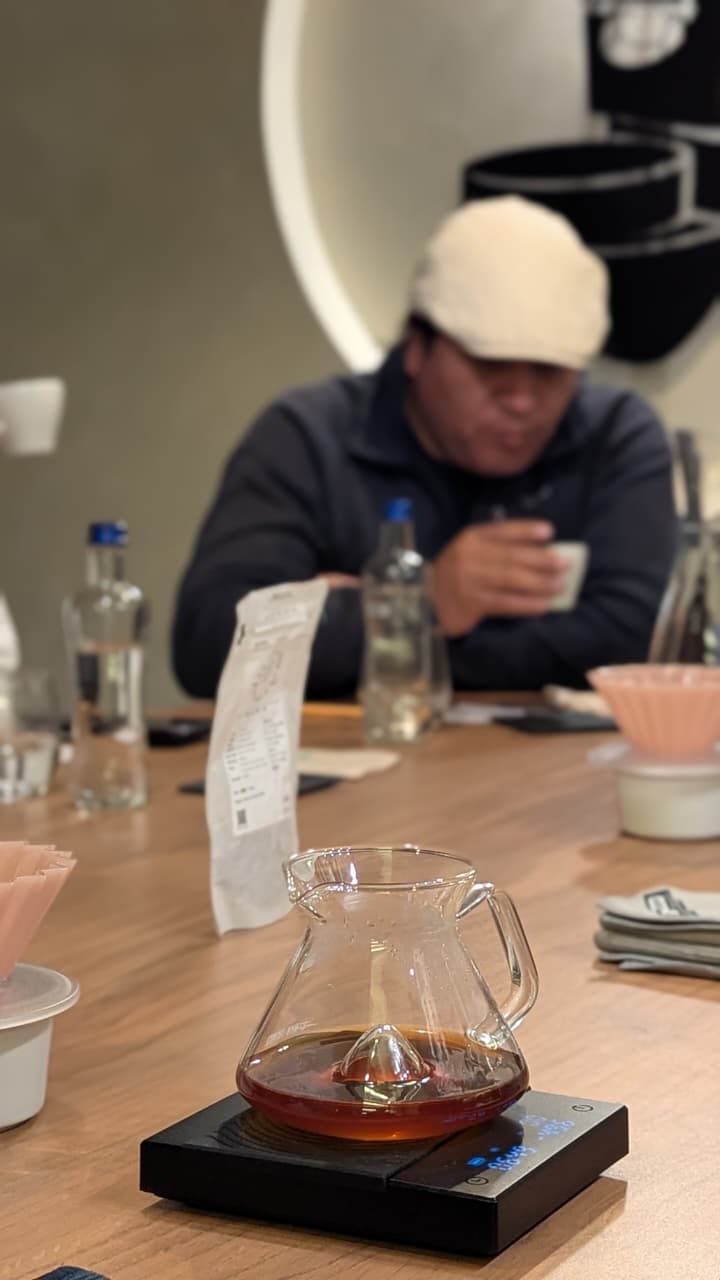
You brew a V60
You brew a V60
- 00:08–00:14 · Intro to filtered coffee — Question: “¿Cuál es un filtrado? What is a filtered coffee?” A filtered coffee is made with grounds where water flows through a porous material — clean and lighter, a sharp contrast to espresso.
- 00:14–00:16 · Equipment — Kettle, grinder, scale, filters, and drippers. Point out the range on the bench: Origami, V60, V70, Tornado, and the rest.
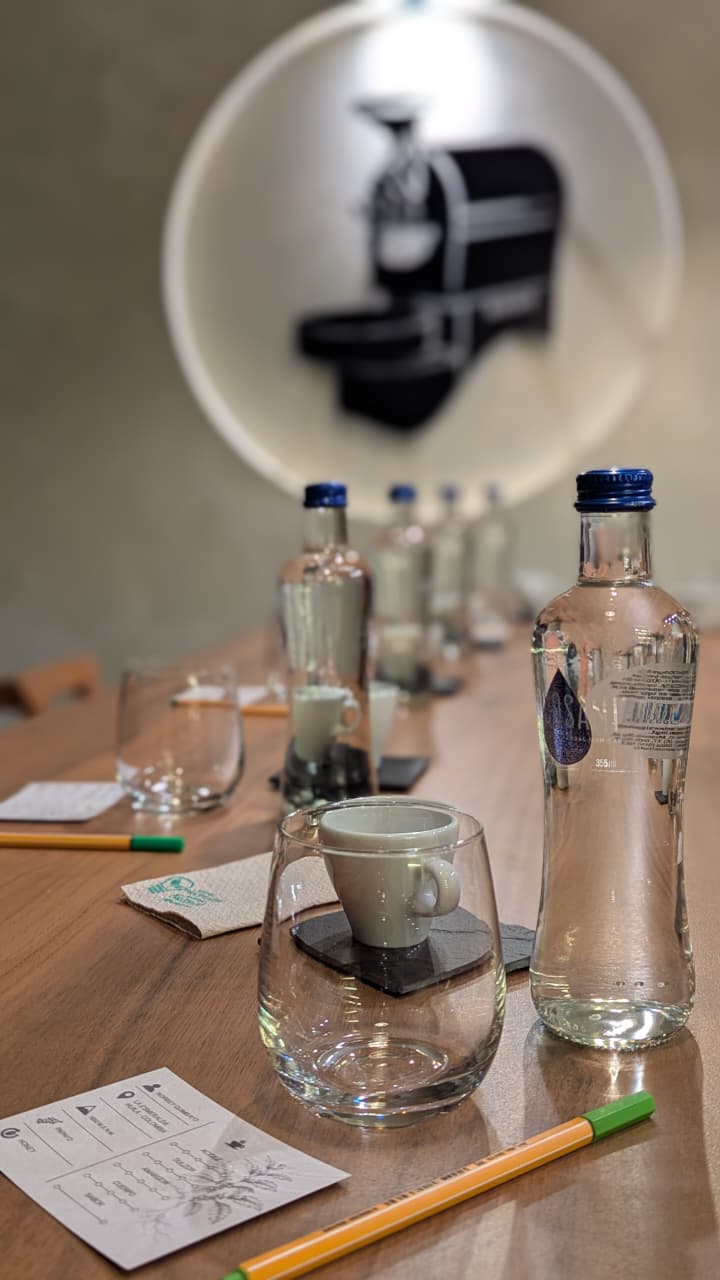
- 00:16–00:24 · Instructor demonstration — Walk the brew with everything pre-staged (grounds ready, water hot). Hand out recipe cards so guests can follow visually.
- 00:24–00:26 · The coffee — Origin, roast profile, and flavor notes of the lot they are about to brew.
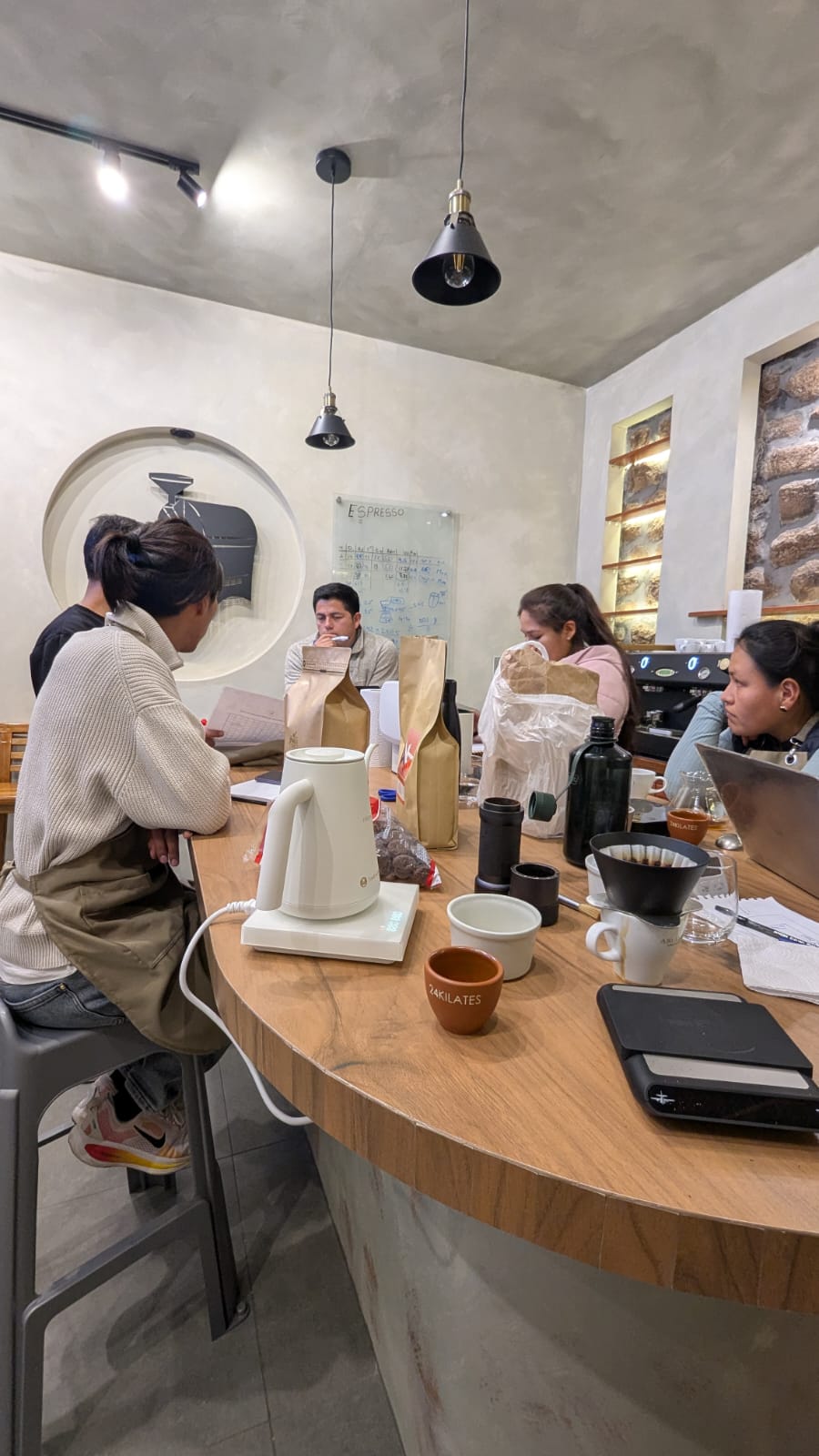
- 00:26–00:46 · Hands-on — Cue: “Everybody to your station. Follow my instructions and use your recipe card.”
- Warm water to 86°C (push the kettle button).
- Put your beans into the grinder (grind size is already preset).
- Purge (rinse) the paper filter with hot water.
- Server on the scale, dripper on top. Tare to zero. Grounds into the dripper.
- Weigh exactly 15 g of coffee. Tare again.
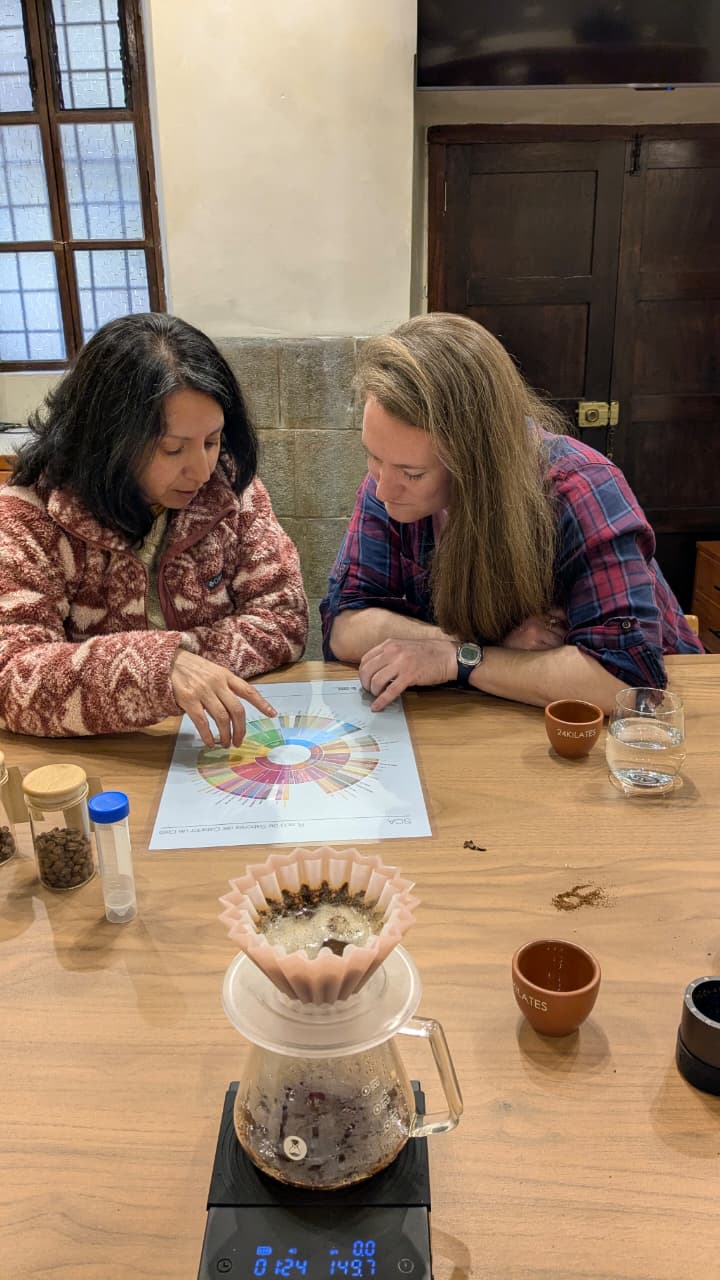
- At 86°C, bloom: 45 g of water. Wait 1 minute.
- Before the dripper empties, second pour: +100 g (scale reads 145 g).
- Before it empties again, final pour of 90 g (scale reads 235 g).
- 00:46–00:51 · Taste — Cue: “Try it!” Taste each other’s brews and talk about why a cup came out the way it did.
Espresso & milk
Espresso & milk
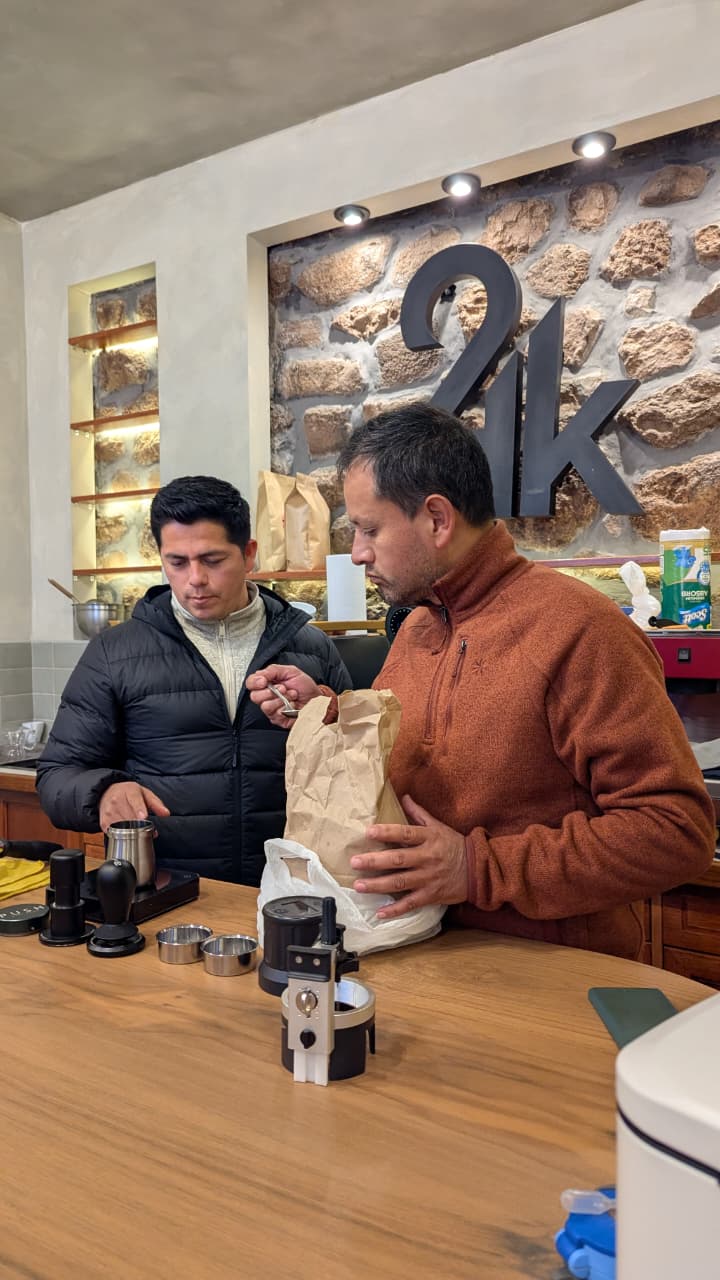
- 00:51–00:57 · Intro & tools — Question: “What can we make with an espresso machine?” Beyond a straight espresso: milk drinks like a cappuccino and a flat white. Tools: espresso machine, portafilter, grinder, scale, filter basket, WDT, tamper, and milk jug.
- 00:57–01:27 · Pull a shot, then milk — Portafilter on the scale, zero it. Dose exactly 18 g from the grinder. WDT to distribute. Tamp straight down, firm and even. Scale on the drip tray, lock the portafilter, cup on the scale, zero it. Start the shot and the timer together. Stop at the recipe weight (about 36 g in 25–30 seconds). Purge the steam wand, texture cold milk to glossy microfoam, and pour a cappuccino or flat white.
- 01:27–01:36 · Practice & tasting — Guests pull their own shots, steam milk, build the drink at their station, and drink it.
Roast a batch to take home
Roast a batch to take home
- We run a batch roast together and cover the fundamentals of the roasting process.
- Everyone leaves with 150 grams of that coffee.
what you get
- 1. Fundamental knowledge of creating and dialing in a V60 pour-over recipe.
- 2. Understanding espresso extraction ratios and microfoam milk texturing techniques.
- 3. A hands-on roasting session with the Roast Master, plus 150g of your fresh roast to take home.
VIEW DETAILS
$54
PEN 184.00


![Odar Lab [Sensory & Roast]](/Media/experiences/tour-22/01-lab-cupping-table.jpg)
![Odar Lab [Sensory & Roast]](/Media/experiences/tour-22/02-odar-cupping-spoon.jpg)
![Odar Lab [Sensory & Roast]](/Media/experiences/tour-22/03-cupping-forms.jpg)
![Odar Lab [Sensory & Roast]](/Media/experiences/tour-22/04-guided-cupping.jpg)
![Odar Lab [Sensory & Roast]](/Media/experiences/tour-22/05-flavor-wheel.jpg)
![Santa Teresa [Cloud Forest]](/Media/experiences/tour-1/01-visitor-and-producer.jpg)
![Santa Teresa [Cloud Forest]](/Media/experiences/tour-1/02-cloud-forest-morning.jpg)
![Santa Teresa [Cloud Forest]](/Media/experiences/tour-1/03-farm-walk.jpg)
![Santa Teresa [Cloud Forest]](/Media/experiences/tour-1/04-coffee-trees.jpg)
![Santa Teresa [Cloud Forest]](/Media/experiences/tour-1/05-cherries-on-branch.jpg)
![Santa Teresa [Cloud Forest]](/Media/experiences/tour-1/06-harvest.jpg)
![Santa Teresa [Cloud Forest]](/Media/experiences/tour-1/07-cloud-forest-canopy.jpg)
![Santa Teresa [Cloud Forest]](/Media/experiences/tour-1/08-afternoon-farm.jpg)
![Santa Teresa [Cloud Forest]](/Media/experiences/tour-1/09-valley-light.jpg)
![Santa Teresa [Cloud Forest]](/Media/experiences/tour-1/10-hidroelectrica-route.jpg)
![Santa Teresa [Cloud Forest]](/Media/experiences/tour-1/11-cup-at-the-farm.jpg)
![Santa Teresa [Cloud Forest]](/Media/experiences/tour-1/12-ripe-cherries.jpg)
![Santa Teresa [Cloud Forest]](/Media/experiences/tour-1/13-washed-parchment-drying.jpg)
![La Catarata [Jaén, Cajamarca]](/Media/experiences/tour-2/01-la-catarata-sign.jpg)
![La Catarata [Jaén, Cajamarca]](/Media/experiences/tour-2/02-farmer-angel.jpg)
![La Catarata [Jaén, Cajamarca]](/Media/experiences/tour-2/03-angel-in-the-plot.jpg)
![La Catarata [Jaén, Cajamarca]](/Media/experiences/tour-2/04-cherries-on-the-tree.jpg)
![La Catarata [Jaén, Cajamarca]](/Media/experiences/tour-2/05-brix-sweetness.jpg)
![La Catarata [Jaén, Cajamarca]](/Media/experiences/tour-2/06-measuring-ripeness.jpg)
![La Catarata [Jaén, Cajamarca]](/Media/experiences/tour-2/07-cherry-clusters.jpg)
![La Catarata [Jaén, Cajamarca]](/Media/experiences/tour-2/08-fruit-on-the-stem.jpg)
![La Catarata [Jaén, Cajamarca]](/Media/experiences/tour-2/09-ph-meter.jpg)
![La Catarata [Jaén, Cajamarca]](/Media/experiences/tour-2/10-process-check.jpg)
![La Catarata [Jaén, Cajamarca]](/Media/experiences/tour-2/11-fermentation.jpg)
![La Catarata [Jaén, Cajamarca]](/Media/experiences/tour-2/12-wet-mill.jpg)
![La Catarata [Jaén, Cajamarca]](/Media/experiences/tour-2/13-pulping-station.jpg)
![La Catarata [Jaén, Cajamarca]](/Media/experiences/tour-2/14-depulper-and-pulp.jpg)
![La Catarata [Jaén, Cajamarca]](/Media/experiences/tour-2/15-washing-channel.jpg)
![La Catarata [Jaén, Cajamarca]](/Media/experiences/tour-2/16-parchment-drying.jpg)
![La Catarata [Jaén, Cajamarca]](/Media/experiences/tour-2/17-dried-parchment.jpg)
![La Catarata [Jaén, Cajamarca]](/Media/experiences/tour-2/18-bagged-lots.jpg)
![La Catarata [Jaén, Cajamarca]](/Media/experiences/tour-2/19-angel-with-finished-beans.jpg)