Purple Bean

Lab talk · ~10 min

1 / 16

01 // Origin talk · ~10 min

Peru

Coffees

A topographic reading of the belt, the highlands, and the varieties that actually show up in the cup — with honest caveats.

Purple Bean Cusco · La Convención

Relief of Peru with the coffee zones marked.

02 // The belt

A thin band around the earth

Coffee grows between the Tropic of Cancer and the Tropic of Capricorn (~23.5°N–23.5°S). Specialty Peru is overwhelmingly arabica on the eastern Andean slopes — the ceja de selva.

  1. 01
    Two lines mark the tropics

    Arabica prefers cooler highland tropics. Robusta tolerates hotter lowlands.

  2. 02
    It starts in Ethiopia

    Wild plants on the Ethiopian plateau. People first cultivated and brewed it in Yemen, in the 15th century.

  3. 03
    Where it grows now

    Only inside that belt. Latin America, led by Brazil and Colombia. Africa, Ethiopia and Kenya. Asia, Vietnam and Indonesia.

Colors = origin countries, not a continuous shaded strip. Peru in purple. World leaders by green-bean volume sit in this band: Brazil, Vietnam, Colombia, Indonesia, Ethiopia.

03 · The country

Peru, and its valleys

These are the official 2023 department limits, drawn as vectors. Coffee is not on the coast and not on the high plateau. It is on the eastern slope, where the Andes drop into the Amazon. The next maps open those valleys.

  • Cajamarca
  • Amazonas
  • San Martín
  • Piura
  • Huánuco
  • Pasco
  • Junín
  • Ayacucho
  • Cusco
  • Puno

04 · Species, then varieties

Four coffees, one cup

More than 120 species exist. Almost every cup in this room is Arabica. A variety is a cultivated kind inside a species. Typica, Bourbon, and Geisha are Arabicas — not different species.

Arabica bean

01

Arabica

Coffea arabica · about 800–2,200 m · ~60% of the world The specialty species. Cooler highlands, a slower cherry, more acidity and sweetness. This is the Peru we are about to walk.
Robusta bean

02

Robusta

Coffea canephora · sea level to about 800 m · ~40% Hot, wet, and tough. Nearly twice the caffeine, and a bitter, rubbery cup. Instant coffee and cheap blends. Not the specialty map.
Liberica bean

03

Liberica

Coffea liberica · low and hot, mostly under 600 m A huge, awkward cherry and a woody, smoky cup. Planted after leaf rust, then dropped when Robusta sold better. Still a local drink in the Philippines and Malaysia. Well under 2% of the world, with Excelsa.
Excelsa bean

04

Excelsa

Usually filed as a Liberica · about 200–1,000 m Botanists treat it as a kind of Liberica. The trade still prints the name. Tart, dark fruit, often blended away. You will almost never cup it as its own specialty lot.

05 · After the pick

Washed, honey, natural

The seed is inside a fruit. How that fruit comes off is the process, and it changes the cup as much as the mountain does. In Peruvian specialty, washed is still the default.
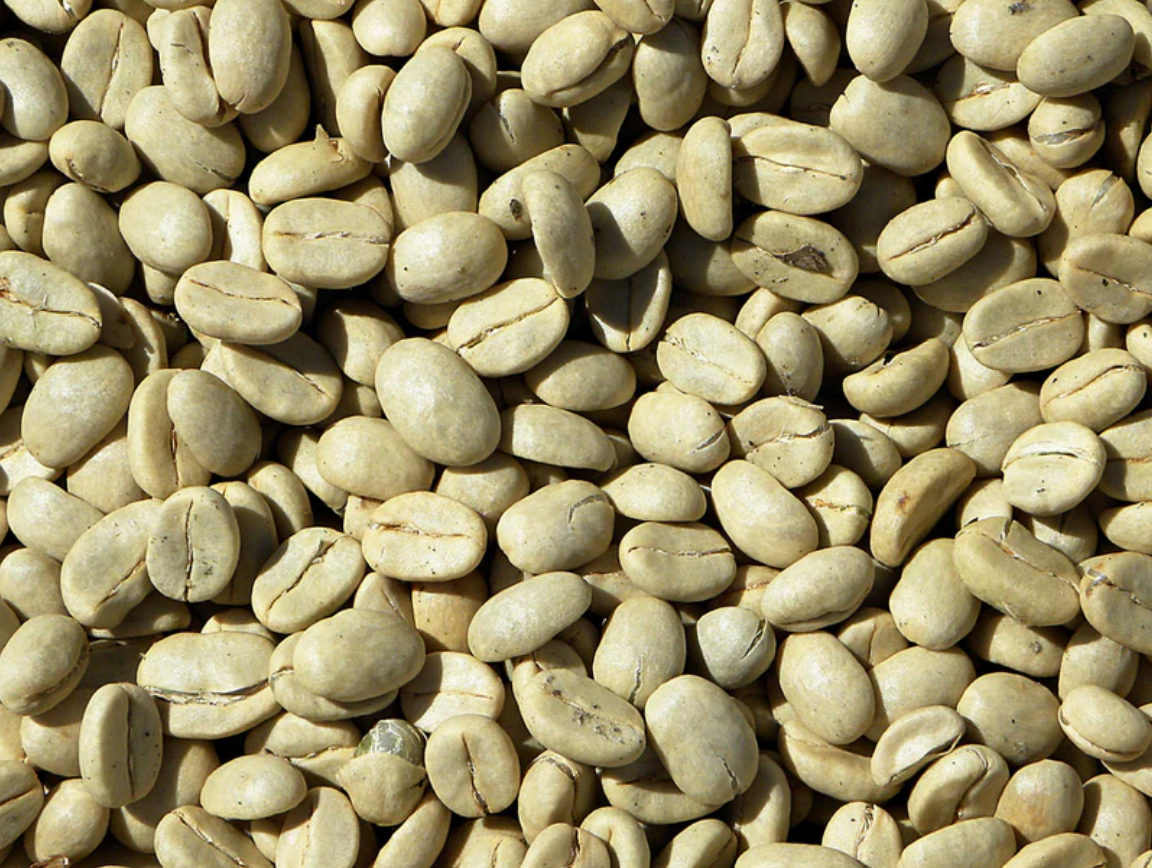
Washed coffee drying as parchment after the fruit is removed.

01

Washed

Pulp off, ferment, wash, then dry the parchment. Clean and bright. The mountain shows. This is most of what you will taste here.
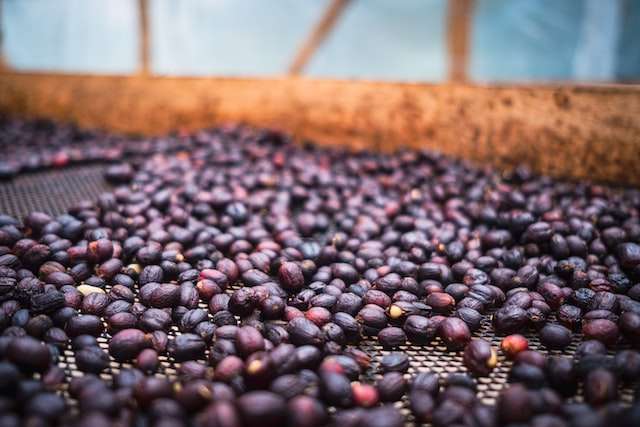
Honey process: the sticky fruit layer left on the seed while it dries.

02

Honey

Pulp off, but the sticky mucilage stays on while it dries. Yellow, red, or black is how much of that layer was left. Sweeter than washed, cleaner than a natural.
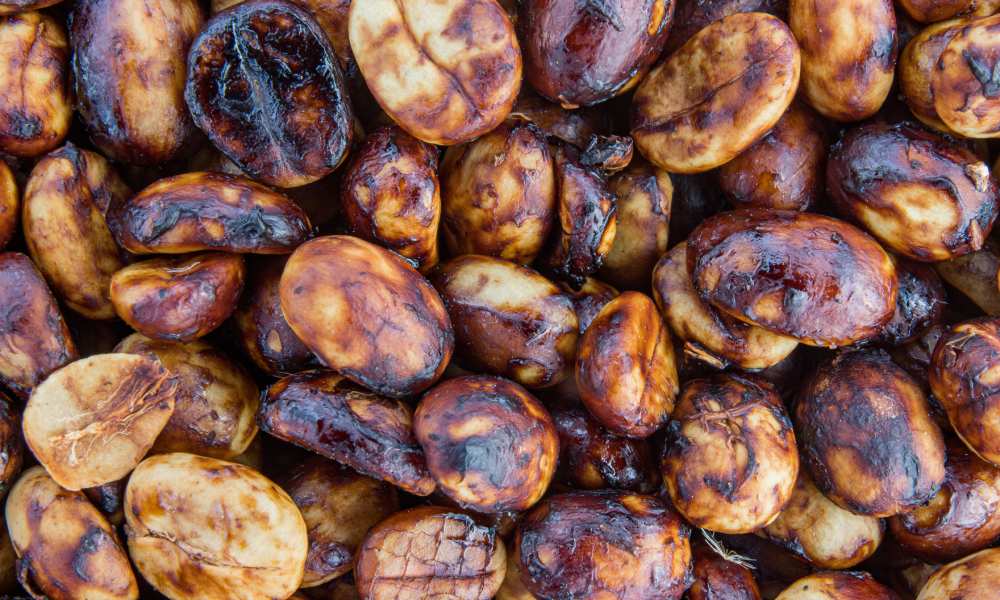
Natural process: whole coffee cherries drying on a raised rack.

03

Natural

The whole cherry dries in the sun, then the seed is hulled. Fruit, berry, a heavier body. Uneven drying tastes like ferment. In Peru this is the accent, not the rule.

06 // Altitude → density → flavor

Why altitude

Higher elevation, cooler means and a diurnal swing, then slower cherry maturation, a denser seed, more sugars and acids. Elevation is a proxy, not destiny.

StepMechanismCup
Cool / highSlower ripeningTime for sugars and acids
Diurnal swingSeed allocationDenser cellular structure
DensityDifferent roast heat uptakeBright, complex when roasted well
CaveatMoisture, variety, process, latitudeDensity is not automatic “better”

Talk line Higher usually means denser and more acid-driven complexity — if the cherry was ripe, the variety can express, and processing didn’t erase it.

0 M 1000 2000 4000+ COAST ANDES CEJA DE SELVA AMAZON W → E SECTION · LIME = TYPICAL ARABICA BAND ~800–2200 M

07 · Cusco

La Convención

Nearly all of Cusco’s coffee is this one province. 900–2,000 m. Quillabamba is the valley town. Darker districts: Inkawasi, Santa Teresa, Echarate.

Café Machu Picchu–Huadquiña (Indecopi, 2011). Softer and more floral than the north — process shows up fast.

  1. 01
    Washed

    Caramel, cocoa, brown sugar, mild citrus. Soft acidity.

  2. 02
    Honey & natural

    Peach, apricot, tropical fruit. Heavier body.

  3. 03
    High slopes

    Florals, stone fruit, tea-like. SL lots can read blackcurrant — not every bag is Geisha.

Inkawasi is Cusco, not Puno

08 · The other valleys

Where the cup sits

North is brighter. Center is rounder. South — Cusco and Puno — is floral, and the process shows. Washed is the default.

North

Cajamarca

  • Red fruit
  • Citrus
  • Stone fruit
Jaén · San Ignacio. Bourbon adds brown sugar.

North

Amazonas

  • Floral
  • Citrus
  • Chocolate
Rodríguez de Mendoza. A step softer than San Ignacio.

Center

Junín

  • Chocolate
  • Caramel
  • Nuts
Chanchamayo · Villa Rica. Rounder body.

South

Puno

  • Floral
  • Citrus
  • Stone fruit
Sandia, with Cusco. High, cool, process shows.

09 · The country, in height

Where the coffee grows

This picture is real elevation. Pale is low: the coast, and the Amazon. Violet is the Andes. The darkest violet is the crest.

The lime band is the coffee zone: the slope between that crest and the jungle, the ceja de selva, about 800–2,200 m. Not the dry coast. Not the frozen top.

A lot named for a town is still a place on that face. The town can sit in the valley while the farm is a few hundred meters above it. Ask for the meters.

Shaded relief of Peru. The lime band is the coffee slope between the Andes and the jungle.

10 · Varieties

Varieties

The name on the bag is a claim. Ask what was planted, and what was picked.

Typica coffee cherries on the branch

Typica

Heritage

Originally from Yemen and Ethiopia, Typica is the foundational heritage variety of Arabica in Latin America. It produces a sweet, clean cup but is susceptible to leaf rust, making it increasingly rare as farms replant with hardier hybrids.
Bourbon coffee cherries on the branch

Bourbon

Red is the default

Originating on the island of Bourbon (now Réunion) from Yemeni seeds, it produces 20-30% more yield than Typica. It is known for complex acidity and a balanced, sweet cup. Red Bourbon is the standard, though yellow and pink mutations exist.
Geisha coffee cherries along a long branch

Geisha

Real, and also mislabeled

Originating in the Gori Gesha forest of Ethiopia, this variety became famous in Panama for its extraordinary floral and tea-like aromatics. While real plantings exist in Peru, its high market value sometimes leads to mislabeling of other varieties.

11 · Names on the bag

Special names

  1. 01
    Marsellesa

    A Sarchimor. Rust resistance and yield. Good at altitude, not exceptional. It is not Catimor CR-95.

  2. 02
    SL-09 / “Inca Geisha”

    Inkawasi samples have tested closer to SL-09 than to Geisha. The cup can be floral. Don’t tell it as settled history.

  3. 03
    Orange Bourbon · Santa Teresa

    Bourbon is grown there. The color name travels loosely. Verify the lot before you say it.

Geisha Core Ethiopia
≠ DNA
SL-09 Ethiopian legacy

Marsellesa ≠ Catimor CR-95. Rust-resistant names are not interchangeable.

Ethiopia, home of Geisha, and Peru, where the Inkawasi lot is grown.

12 · Flavor

Read the cup from the center out

Start at the center and move out. Washed is still most Peruvian specialty. Naturals and honeys are the accent. Two denominations: Café Villa Rica, and Café Machu Picchu–Huadquiña.
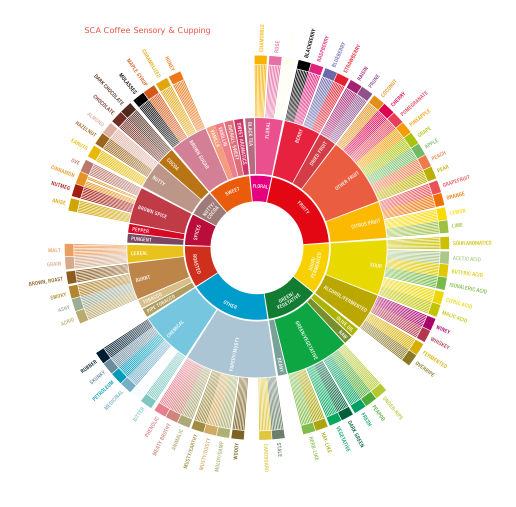
  1. Center — chocolate, caramel, a rounder cup. Chanchamayo, Villa Rica.
  2. North — brighter, sweeter, red and yellow fruit. San Ignacio.
  3. South — the process shows. Florals and fruit in La Convención and Sandia.
SCA coffee flavor wheel

13 · Brew

What is a pour-over

Hot water poured by hand through a bed of coffee and a paper filter. Gravity does the work. No pump, no pressure — a clean cup, and the pour is the recipe.

  1. 01
    Filter, not pressure

    Espresso forces water through a packed puck. A pour-over lets it fall through a cone.

  2. 02
    Paper holds the grounds

    Oils and fines stay in the filter. The cup is clearer and lighter than immersion.

  3. 03
    You control the pour

    How fast, how much, and how hot the water is changes sweetness, acidity, and body.

GRAVITY · NO PRESSURE gooseneck COFFEE BED PAPER FILTER CONE SERVER
Water falls through grounds and paper. The server catches the brew.

14 · Kit

What you need

Six tools and water you would drink. The cone can be a V60. The rest is what makes the recipe repeatable.

Water

120–150 ppm Clean, not distilled. Too soft tastes hollow. Too hard tastes dull.

A useful target

SCA-ish Calcium ~68 ppm · magnesium ~15 · sodium ~10. Taste the water before you blame the coffee.

Coffee

Fresh, whole bean Grind just before the pour. 15 g is a single cup in this lab.

15 · Recipe

Build the recipe

Five numbers, then the pour. Change one at a time. This is the Purple Bean V60 card.

  1. Dose15 gcoffee
  2. Water250 gin the cup
  3. Ratio1 : 16.7water ÷ dose
  4. Temp93°Coff boil
  5. Grind600–800µm · medium

Pour in three moves. Clock starts at the bloom.

  1. 0:00Bloom 45 gWet all the grounds. Wait.
  2. 0:45Pour to 150 gConcentric circles. Stay off the paper.
  3. 1:15Pour to 250 gCenter. Let it draw down.
  4. 2:30DoneBed should look flat, not soupy or dry in the middle.

16 · Close

Where should we spend the time?

We’ll taste. Before that, tell us which part of the tour you want the most time on.

  1. 01
    Brewing

    How the cup is made. Grind, water, and the pour.

  2. 02
    Barismo

    The bar. Espresso, milk, and the drink in front of you.

  3. 03
    Roasting

    How the green seed becomes the coffee you smell.