

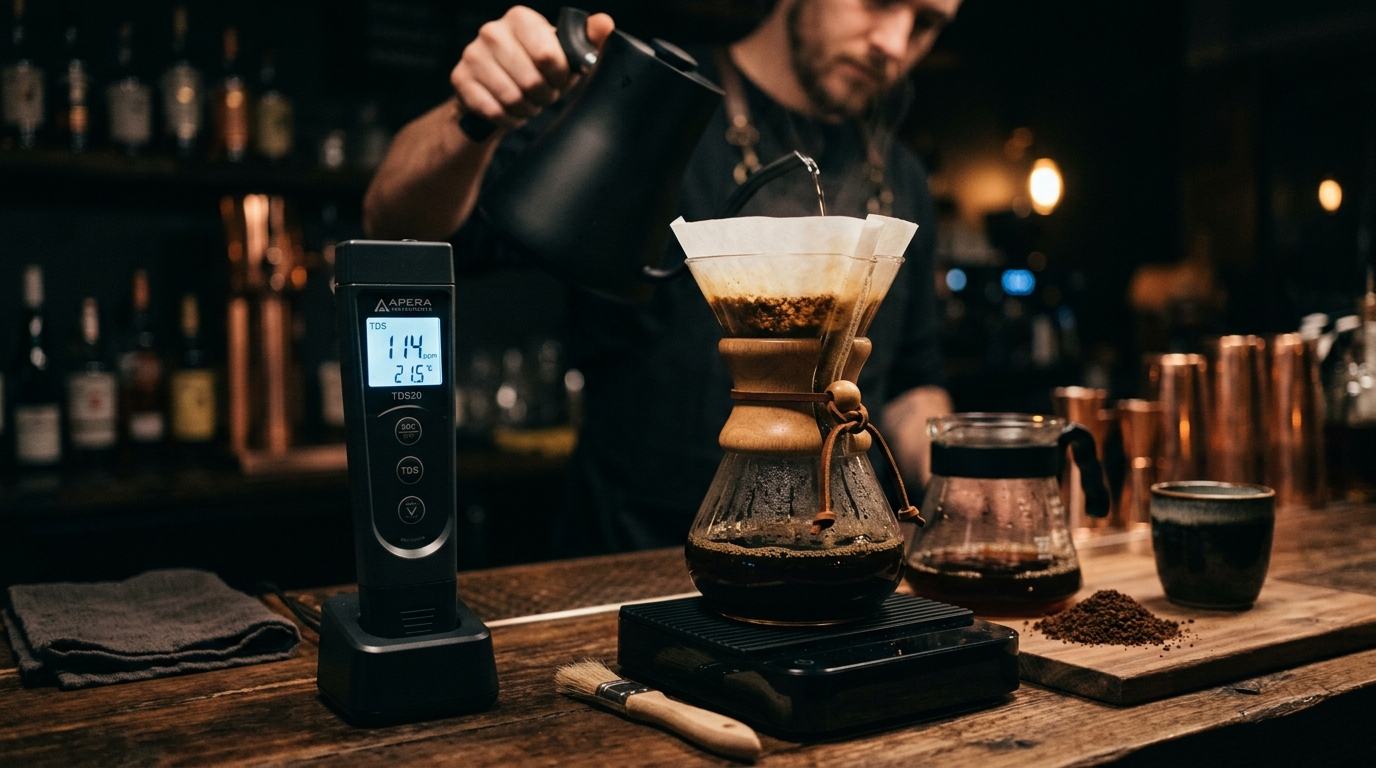
According to the Specialty Coffee Association (SCA), your brewing water should ideally meet specific metrics for the best extraction.
The Perfect Mineral Breakdown
- Total Hardness (60–120 ppm): This should primarily consist of Calcium (which enhances sweetness and body) and Magnesium (which brings out sharp, vibrant, fruity flavors). [1] [2]
- Alkalinity / Buffer (40 ppm): Usually made of bicarbonates. It acts as a shield to regulate pH. Too much buffer neutralizes the delicious, natural acidity of light roasts, making the coffee taste boring. Too little buffer makes the coffee taste intensely sour and metallic. [1] [2]
- pH Range (6.5–7.5): Clean water should stay relatively neutral to avoid altering the coffee's natural chemistry.
- Sodium (10 ppm): A tiny trace amount helps smooth out bitterness without making the water taste salty. [1]
- Chlorine (0 ppm): Any presence of chlorine or chloramine from municipal tap water will completely ruin the flavor and aroma of coffee. [1] [2]
🚰 Quick Guide to Common Water Sources
| Water Source | Typical TDS | Coffee Flavor Impact | Verdict |
|---|---|---|---|
| Distilled / ZeroWater | 0 ppm | Hollow, flat, intensely sour, and sharp | ❌ Do not use plain |
| Standard Tap Water | 200–400+ ppm | Dull, bitter, heavy, and chalky | ❌ Avoid |
| Filtered (Brita/Carbon) | Matches tap | Tastes cleaner, but does not lower TDS | ⚠️ Okay if starting tap TDS < 200 |
| Bottled Spring Water | 100–250 ppm | Balanced, smooth, and predictable | ✅ Great fallback |
The "Good Ballpark" Mix Strategy
The truth is, it doesn't have to be perfect. You don't need expensive specialty mineral sachets of powder and you don't need zero PPM water to get a good ballpark range of TDS water.
While you won't know the exact molecular breakdown of the minerals in your water, you can rest assured that generally, if you hit a target of around 90-120 PPM, you'll have a decent balance of minerals to extract a great cup. You can do this easily by mixing two different waters you already have access to.
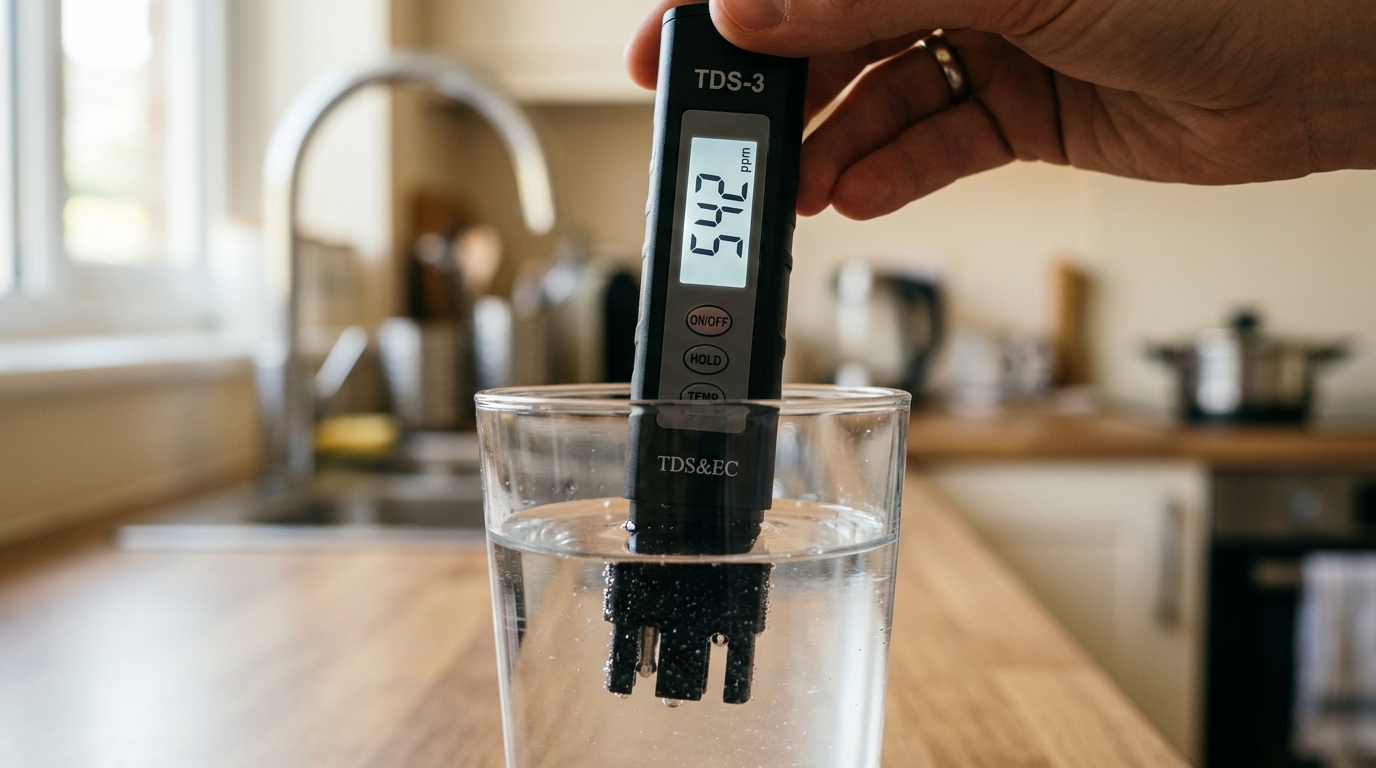 Example: Tap Water (542 PPM)
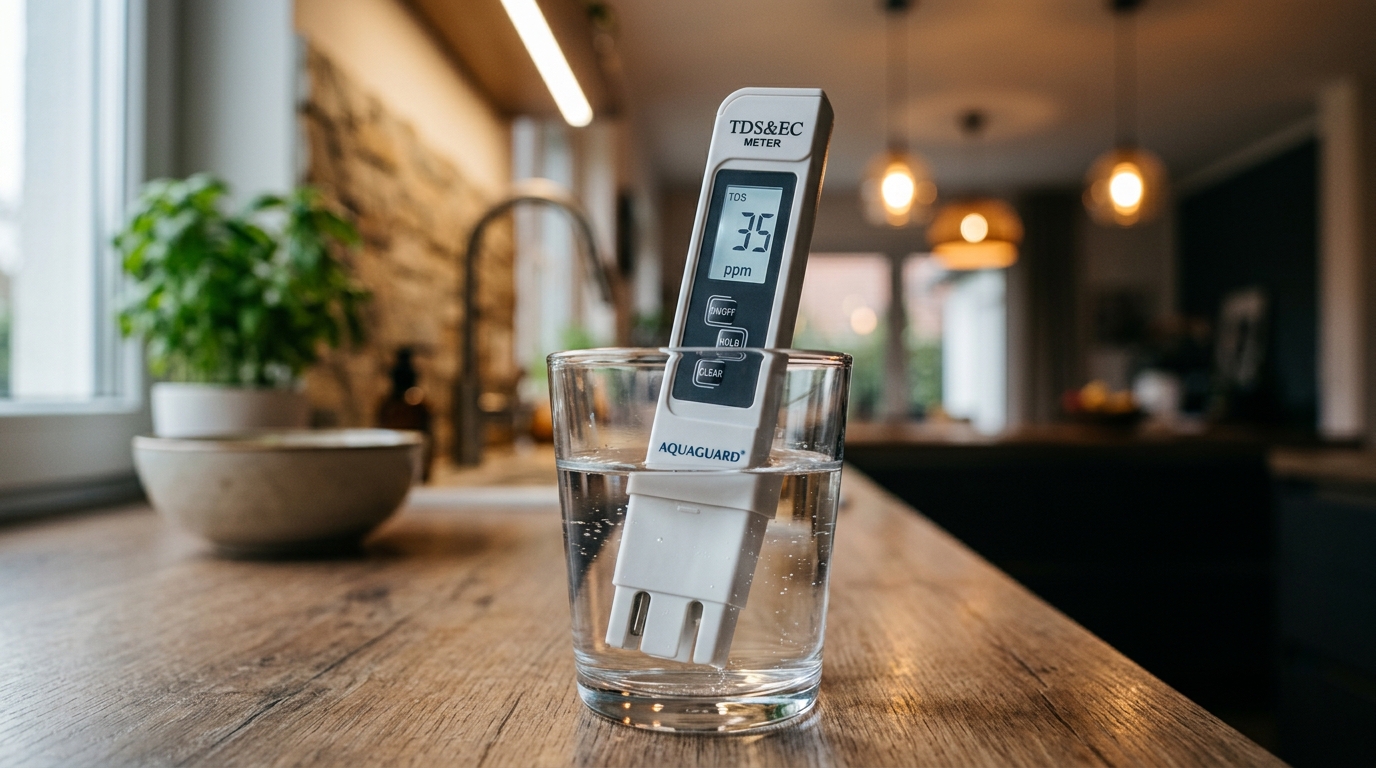 Example: Bottled Water (35 PPM)
For example, I did a test where I used my filtered tap water (which was very high, over 500 PPM) and some bottled water (which was very low, around 35 PPM). By using a simple ratio and mixing them together, I balanced it out to hit my target range of 90 PPM.
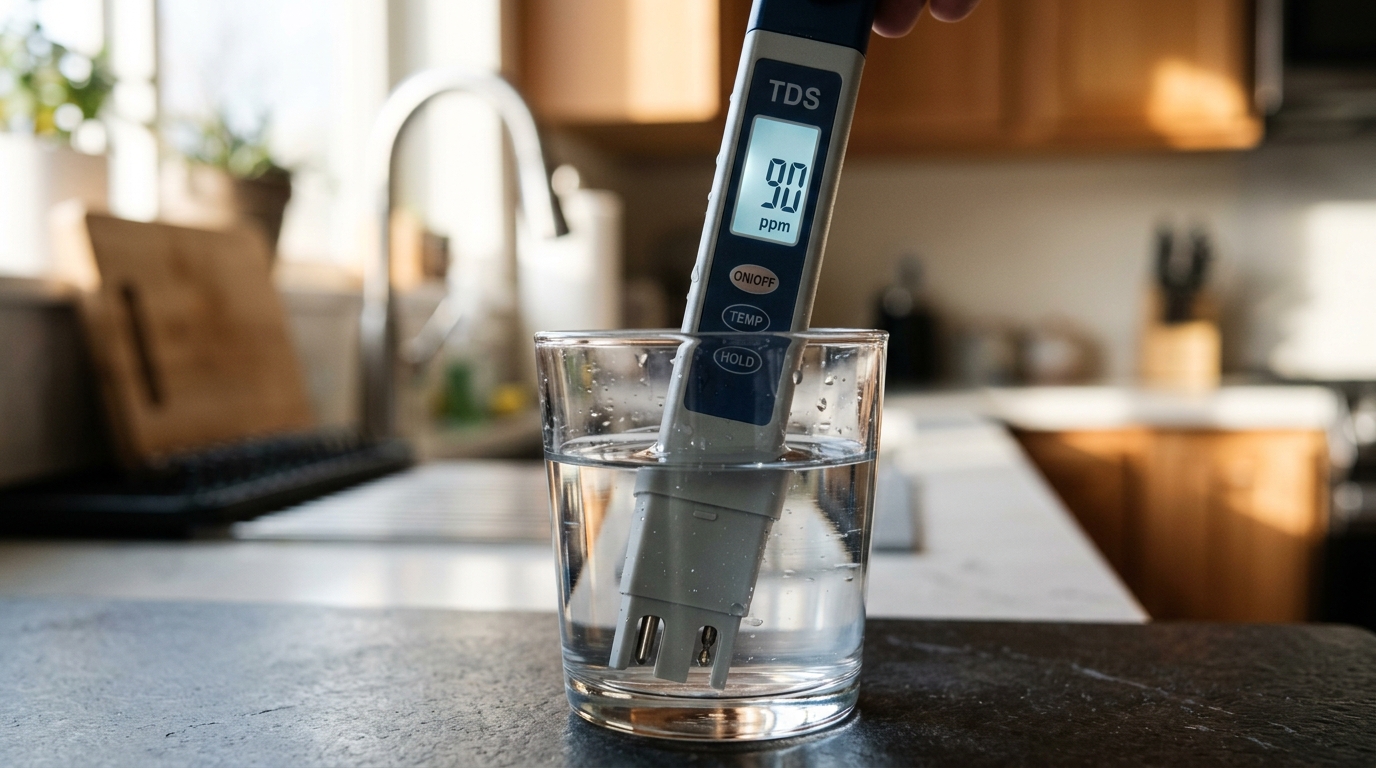 The Target Mix: 90 PPM
You can manipulate your TDS by just mixing two different waters you have around your brewing area. All you need is a $5 digital TDS meter to measure your starting waters and your final mix!
Pro Tip:
Start by measuring both waters. If you have 300 PPM tap water and 0 PPM distilled water, mixing them in a 1:2 ratio (one part tap, two parts distilled) will get you perfectly to 100 PPM!